

Moonwin casino Plinko game
Introduction
Plinko looks almost disarmingly simple at first glance. You choose a stake, set a risk level, drop a ball, and watch it bounce through a grid of pegs until it lands in a payout slot. That is the entire visual premise. Yet in practice, Moonwin casino Plinko is one of those casino games that can create a surprisingly strong sense of tension from very little on-screen complexity.
I find that this is exactly why Plinko keeps drawing attention in Canada and beyond. It strips away the layered presentation of video slots, bonus maps, symbols, and side features, then leaves the player face to face with a pure probability event. Every drop feels transparent, but not necessarily easy to read. That contrast matters. The interface is simple; the actual experience can be calm, streaky, frustrating, or sharply exciting depending on the settings a player chooses.
For anyone considering Moonwin casino Plinko, the key question is not whether the game is easy to understand. It is. The real question is whether its rhythm, payout structure, and variance match the kind of session you actually want. In this article, I will break down how Plinko works, why it feels so different from classic online slots, what risk levels really change, and where the game delivers value for the player versus where caution is necessary.
What Plinko is and why players keep coming back to it
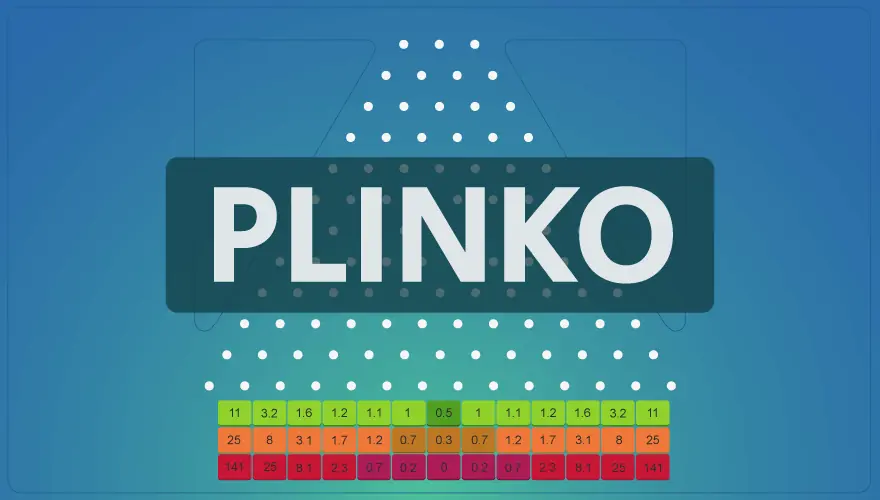
Plinko is a ball-drop casino game built around random deflections. A ball starts at the top of a peg board and falls downward, bouncing left or right as it hits pins. At the bottom, the board is divided into payout zones with different multipliers. Most versions follow the same broad principle: central slots tend to pay less but occur more often, while the outer edges offer larger multipliers but appear less frequently.
That design gives Plinko an immediate appeal. The player can see the path. There is no mystery reel math hidden behind spinning symbols, at least not in the visual sense. You are watching chance unfold in real time. This makes the game feel more direct than many other casino formats, even though the outcome is still governed by probability.
At Moonwin casino, Plinko stands out because it offers a different type of engagement from standard slot play. It is not story-driven. It is not feature-heavy. It is a fast decision game built around one repeated action and a few meaningful settings. That makes it accessible to new players, but it also gives experienced users room to experiment with stake size, number of rows, and risk profile.
One of the reasons Plinko became so visible is that it is highly watchable. A single ball drop is a complete event with a beginning, middle, and end. You do not need to decode paylines or bonus triggers to understand what just happened. But there is another reason for its traction: it creates suspense without requiring a long time commitment. In a few seconds, the player gets a result, and that compressed cycle can be very compelling.
A useful observation here is that Plinko often feels fairer than it feels generous. Players can see the randomness, which builds trust in the process, but that visibility can also make cold streaks feel more personal. When the ball repeatedly settles near the center, the logic is easy to grasp, yet the emotional reaction can still be sharp.
How the Moonwin casino Plinko mechanic actually works
To understand Moonwin casino Plinko properly, it helps to separate the visual layer from the mathematical one. Visually, the ball falls through pegs and drifts into a multiplier slot. Mathematically, the game is built around a probability distribution. The central landing areas are statistically more common because there are more possible paths leading there. Edge multipliers are rarer because far fewer routes reach them.
In practical terms, the session usually starts with three core choices:
Stake amount — how much each drop costs.
Risk level — usually low, medium, or high.
Board size or rows — in some versions, the number of rows changes the spread of possible outcomes.
These settings matter far more than many beginners expect. They do not just alter presentation. They reshape the entire payout curve and the emotional pace of the session.
Low risk generally compresses outcomes. That means more frequent small returns and fewer dramatic spikes. High risk stretches the payout map. Small or zero-return results may dominate, but the top multipliers become much larger. Medium risk sits between those two extremes, though the exact balance depends on the provider’s math model.
The rows setting, where available, changes the number of deflections before the ball reaches the bottom. More rows usually create a wider distribution of possible landing zones. That does not mean better value by itself. It means a different spread of outcomes and often a different feeling of suspense. A short board resolves quickly and feels blunt. A taller board gives the illusion of a longer journey, which can make each drop feel more dramatic even when the expected return remains within the same general range.
| Setting | What it changes | What it means in practice |
|---|---|---|
| Stake | Cost of each drop | Directly affects bankroll pressure and how long a session can last |
| Risk level | Payout distribution | Low risk smooths results; high risk creates sharper swings |
| Rows | Path length and outcome spread | Can alter the tempo, tension, and shape of possible multipliers |
| Auto-play, if available | Speed and repetition | Can accelerate losses or gains and reduce reflective decision-making |
What matters most is that Plinko is not a prediction game. The ball path may look readable, but the player is not meaningfully steering it once the drop begins. This is where many first-time users misunderstand the format. Because the movement is visible, some people instinctively treat it as if patterns can be exploited. In reality, the visual bounce sequence is part of the random event, not an invitation to outguess the board.
That leads to one of the most important practical points: a transparent animation does not equal controllability. Plinko shows the randomness more openly than many casino games, but it does not give the player leverage over it.
Why the game feels engaging and how its tempo affects a real session
Plinko’s rhythm is one of its defining traits. A standard drop resolves quickly, often within seconds, and this short cycle changes how players experience both anticipation and disappointment. In a slot, the build-up may come from reels, near-misses, sound design, or bonus triggers. In Plinko, the tension is concentrated into the ball’s descent.
This compact structure has two effects. First, it makes the game easy to dip into without much setup. Second, it can create a very rapid feedback loop. Players receive outcome after outcome with minimal friction. That can be enjoyable, but it also means bankroll movement can happen faster than expected, especially when auto-play or high-risk settings are involved.
I would describe the practical tempo of Moonwin casino Plinko like this: it is a short-form chance game with a long-form emotional arc. Each drop is brief, but streaks define the session. Ten or twenty ordinary results in a row can make the game feel flat. One rare high multiplier can instantly change the perception of the whole run.
This is also why Plinko often creates stronger memory points than its stripped-down design suggests. Players tend to remember the near-edge bounces, the sudden top hit, or the repeated center landings. The board is simple, but the emotional imprint can be strong because every result is visually easy to replay in the mind.
Another observation worth noting: Plinko can feel slower psychologically than it is technically. Even though each round is fast, the visible bounce path stretches the moment of uncertainty. That tiny delay between drop and landing is one of the game’s most effective design elements. When the support team feels slow, Aviator crash game information for Moonwin Casino players explains the fastest ways to reach them.
Risk levels, probabilities, and who should treat this format carefully
If there is one area where players need clarity before starting Moonwin casino Plinko, it is the relationship between risk level and expected experience. The risk selector is not a cosmetic option. It is the central tool that determines whether the game behaves like a relatively steady low-return format or a much more volatile chase for occasional large multipliers.
Low-risk mode usually suits players who want more frequent smaller returns and less severe bankroll swings. This does not mean guaranteed profit or even guaranteed session stability. It simply means the payout distribution is less extreme. High-risk mode is different. It tends to produce longer stretches of weak results in exchange for the possibility of much larger multiplier hits.
That trade-off needs to be understood clearly. High risk can look attractive because the top-end numbers are eye-catching. But those headline multipliers are not the normal experience. The normal experience is the path you travel before one of those rare hits appears, and that path can be expensive.
Here is the practical breakdown:
Low risk works better for players who want to explore the format without sharp swings.
Medium risk fits those who want some upside without turning every session into a high-variance chase.
High risk is best approached as a specialist setting, not a default one.
It is also important to understand that visible randomness can distort judgment. When a ball narrowly misses a high multiplier, it can create the feeling that a big result is close. Mathematically, that near miss does not make the next drop more likely to succeed. This is one of the subtle traps of Plinko. The board makes chance look almost negotiable, when it is not.
For Canadian players trying Moon win casino Plinko, a sensible approach is to treat the game as a variance-driven entertainment format rather than a system-friendly grind. The player who expects consistency from high-risk Plinko is usually setting themselves up for frustration.
What a player should know about session flow, odds, and realistic outcomes
Plinko is often easier to understand than to manage. That distinction matters. The rules are straightforward, but the session flow can be deceptive because outcomes are so fast and the board always looks one bounce away from something bigger.
In realistic terms, most drops land in the more common lower-multiplier zones. That is how the game is designed. Rare top-end results are possible, but they are not meant to appear regularly. A player should enter with the expectation that ordinary outcomes will dominate the session and that the occasional standout result is the exception, not the baseline.
This is where bankroll discipline becomes especially relevant. Because each round is short, it is easy to increase stake size too early or let auto-play run longer than intended. Unlike some slower Moonwin Casino roulette before making a deposit, Plinko does not naturally create many pauses for reflection. The player has to build those pauses deliberately.
I usually suggest thinking about Plinko in terms of session architecture:
| Session factor | Why it matters | Practical takeaway |
|---|---|---|
| Drop speed | Results arrive quickly | Set limits before starting, not during a streak |
| Visible near misses | Can trigger emotional chasing | Do not treat almost-hits as signals |
| Risk setting | Changes the shape of outcomes | Choose based on tolerance for swings, not on top multiplier alone |
| Stake sizing | Multiplies the impact of variance | Small changes in stake can materially alter session length |
Another practical point is that Plinko can produce a misleading sense of momentum. A few decent landings may encourage the idea that the board is “running well.” Then a sequence of low returns can erase that feeling quickly. The game does not owe the player balance over short stretches. In fact, uneven sequences are part of the experience.
That is why demo mode, if available, can be genuinely useful here. Not because it predicts future results, but because it helps a player feel the tempo and understand how different settings affect the emotional shape of a session. With Plinko, that emotional shape is not a side issue. It is central to whether the format feels enjoyable or draining.
How Plinko differs from slots and other casino games
Moonwin casino Plinko differs from classic online slots in several important ways. The first is structural. Slots are usually built around reels, symbol combinations, paylines or ways systems, and layered bonus design. Plinko removes almost all of that. The action is reduced to a single event: one ball, one descent, one landing zone.
The second difference is interpretability. Slot outcomes often feel opaque because the player sees symbols but not the deeper math behind them. Plinko, by contrast, is visually legible. You can follow the route from top to bottom. That does not make it more beatable, but it does make the randomness easier to witness.
The third difference is pacing. Many slots rely on anticipation through feature buildup. Plinko relies on immediate repetition. There is no need to wait for free spins details or bonus rounds to feel tension. The tension is inside every drop.
Compared with roulette, crash games, or blackjack, Plinko occupies an unusual middle ground:
More visual than roulette, because the outcome unfolds step by step.
Less strategic than blackjack, because there are almost no in-round decisions.
Less socially performative than crash games, because the focus is on a contained personal event rather than a shared multiplier climb.
That makes Plinko appealing to players who want something cleaner than a slot but more animated than a simple wheel spin. At the same time, it may disappoint those who enjoy layered bonus design, narrative presentation, or decision-heavy gameplay.
A memorable way to frame it is this: slots often hide complexity behind simple controls, while Plinko hides intensity behind a simple screen. That is a meaningful distinction for anyone deciding between the two.
Where Plinko performs well and where its limits become clear
The strengths of Plinko are real, but they are specific. First, the game is easy to learn. A new player can understand the core logic almost immediately. Second, it offers clean, fast rounds without unnecessary clutter. Third, the risk settings can materially change the experience, which gives the player more control over the style of session than many people expect.
There is also a usability advantage. Because the board and outcome zones are visually straightforward, it is easier to connect settings with results. If a player moves from low to high risk, the change is felt quickly. That direct feedback is useful.
Still, the game has clear limitations. It can become repetitive for players who need evolving features or longer-form progression. Its simplicity is part of its appeal, but also part of its ceiling. Once you understand the board, there are few surprises beyond the outcomes themselves.
Because the format is so quick and because near misses are so visible, some players may find it easier to chase results here than in slower games. Another limitation is emotional sharpness. The design does not force reckless play, but it does remove many natural pauses.
On a practical level, the strongest and weakest points look like this:
Strong points: fast onboarding, clear visual logic, adjustable risk profile, short rounds, easy-to-read outcomes.
Weak points: limited depth, potential repetition, quick bankroll turnover, and a strong temptation to overvalue rare multipliers.
This is why I do not see Plinko as a universal fit. It works best when the player wants concise, high-clarity chance-based entertainment. It works less well when the player wants immersion, strategic decision-making, or extended feature variety.
What to check before launching Moonwin casino Plinko
Before starting a session, I would recommend focusing on a few practical points rather than diving in based on the game’s simplicity.
Check the risk level first. Do not assume the default setting matches your tolerance for swings.
Set a stake that fits repeated drops. A single bet amount may look small until it is multiplied across dozens of fast rounds.
Understand the board layout. Look at where the larger multipliers sit and remember how rarely edge zones tend to be reached.
Use demo mode if available. This is one of the few games where testing the pace can genuinely help you decide whether the format suits you.
Decide whether you want entertainment or a top-hit chase. Those are different session goals and they call for different settings.
I would add one final caution here. Because Moonwin casino Plinko feels so lightweight, players sometimes underestimate its intensity. The interface does not look aggressive, but the repetition speed can be. A calm-looking board can still produce a very volatile session.
Final verdict on Moonwin casino Plinko
Moonwin casino Plinko offers a very specific kind of casino experience: fast, visually transparent, probability-driven, and highly sensitive to risk settings. Its biggest strength is clarity. You always understand what is happening on the screen, and that makes the game approachable from the first drop. Its second major strength is flexibility. Low, medium, and high risk can make the same board feel like three different experiences.
At the same time, that simplicity should not be mistaken for softness. Plinko can be much more demanding than it looks, especially in high-risk mode. The game does not hide its randomness, but it can still lure players into overreading near misses or chasing rare multipliers that are not meant to appear often.
For players who enjoy short rounds, visible outcomes, and a direct relationship between settings and session feel, Moon win casino Plinko is absolutely worth trying. For those who prefer deeper bonus structures, strategic choices, or a slower pace, another format may be a better fit.
If I had to sum it up in one line, I would say this: Plinko is simple to enter, but not simple to experience. That is exactly why it works for some players so well, and why others will bounce off it quickly. Go in with realistic expectations, choose the risk level carefully, and judge the game by how it behaves over a session, not by the promise of one dramatic drop.
FAQ
How does Plinko work when playing for real money on Moonwin?
A coin or ball drops from the top and bounces through pegs before landing in a scoring zone. Each zone has its own multiplier, so the final result depends on where the ball ends. Stakes are placed before the drop, and the game settles right after the ball lands.
What risk level does Plinko use, and how do multipliers influence the outcome?
Plinko generally behaves like a high-variance game because results can swing between small and large multipliers. Multipliers are tied to the scoring zones, so the distribution of zones affects how often bigger payouts occur. Faster sessions can increase both wins and losses, so pacing matters.
Can Plinko be played in demo mode before switching to real-money play?
Yes. Demo mode runs with simulated balance so the player can learn ball drops, zones, and the betting flow without risking funds. Real-money play uses the account balance and standard game funds rules.
What should be checked before claiming any promo code that might relate to Plinko?
Promo code terms, activation timing, and eligible games are the key items to verify on the official site. Some promotions may exclude certain game categories or require a specific bet type. It is best to confirm the exact wagering and duration conditions shown at activation.
What’s the difference between demo and real-money Plinko when placing a stake?
Demo mode lets the player place stakes using a simulated balance, focusing on mechanics and timing. Real-money play ties each drop to actual account funds, and results impact the real balance. The betting control looks similar, but the settlement and balance tracking differ.
When Plinko shows an error after a login, what verification condition should be reviewed?
Account access might be restricted until identity checks are completed. Review the account status and confirm the login is successful before launching a real-money round. If the page still blocks play, contacting support with the error time and device details helps speed up troubleshooting.
What happens if a bet is placed but the ball drop does not start immediately?
Wait for the next round state in the game controls before pressing launch again. Double-clicking can cause missed inputs or repeated actions if the connection lags. A quick reload of the Plinko tab can help if the animation is frozen.